Our Blog

Your Five-Step Guide to Preventing Tooth Decay While Wearing Braces

October 12th, 2018

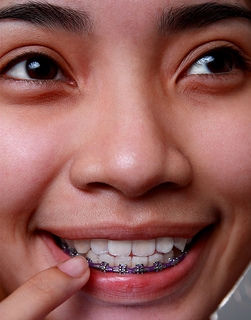
If you’re wearing braces, then you know they are working hard to straighten your teeth. However, those hard-working braces are also preventing you from easily cleaning your teeth. It is essential that you put some extra attention into preventing tooth decay while wearing your braces. When your braces are finally removed by Dr. Viney Saini, you want a beautiful, white smile, not decayed or stained teeth. Here, we’ve listed the five best ways to ensure you have the smile you’ve always dreamed of once your braces are gone.

Use a Special Toothbrush

A regular toothbrush just doesn’t cut it when you are wearing braces. You also need to use an interdental toothbrush so that you can effectively clean behind the braces. This type of brush has bristles that are shaped like a Christmas tree that can remove food residue in the braces and on the teeth. We also recommend using a WaterPik, with its highly pressurized pulsating water, to help get all of those hard-to-reach places.

Brush after Every Meal

Since braces block food from naturally escaping your teeth after eating, it’s important that you take the time to brush and floss after every meal. The less time food has to sit on your teeth, the less likely it is to cause decay. This may seem like an inconvenience, but trust us, when you get your braces off, you will be very glad you brushed after every meal.

Don't Forget the Mouth Rinse

Even after properly brushing and flossing, there are probably some food particles in your braces. A fluoride mouth rinse is the best way to ensure that every bit of food is removed after meals. If you do not have a mouth rinse available, we suggest using water — it’s better than nothing.

Avoid Sweets

Prevention is definitely the best medicine when it comes to avoiding tooth decay. If you can nix decay-causing sugary foods from the outset, we promise you’ll spend less time trying to treat problems in the future.

Get Regular Checkups

Visit your dentist regularly while you are wearing braces. Our office recommends a thorough cleaning every three to six months. Let our Clarksburg, MD and Frederick, MD office know if you have questions about your oral health while in braces - our entire team at Viney P. Saini Orthodontics is here to make sure your teeth are as beautifully straight as they are healthy!


Year-End Insurance Reminder

October 5th, 2018

Now that October is upon us, Dr. Viney Saini and our team at Viney P. Saini Orthodontics wanted to send you a friendly reminder to schedule your orthodontic appointment prior to the end of the year to take full advantage of any flex spend, health savings, or insurance benefits that you may have.

The end of the year is always a busy time so make your appointment now so you don’t lose your available benefits! Give us a call today!

Caring for Your Smile after Invisalign® Treatment

September 28th, 2018

You went through a lot of effort and work to achieve your perfect smile. You wore your Invisalign aligner trays, brushed and flossed diligently, and now your treatment is done! What happens now?

In order to keep your teeth healthy and beautiful, you should keep several practices in play.

Retainers

Although everyone’s needs are different, many patients require a retainer after Invisalign treatment. If a retainer is recommended by Dr. Viney Saini, use it as directed. Not wearing retainers could result in shifting teeth and potentially ruin your results.

It’s also recommended that you avoid hard, crunchy foods for the first few weeks as your teeth adjust. For younger patients, retainers are normally worn until the wisdom teeth come in or are extracted.

Brushing and Flossing

It should come as no surprise that flossing should still be done every day to remove plaque, which can develop into tartar or calculus. The build-up can lead to gingivitis and gum disease.

Your gums may be more sensitive for a week or two after your orthodontic work is completed. A warm saltwater rinse may relieve discomfort.

Because your teeth have been protected by your Invisalign aligners and are now fully exposed, they may be more sensitive the first few weeks after treatment. If that’s the case, we can recommend a sensitive toothpaste to relieve your discomfort. If your teeth are stained, a professional whitening treatment may be considered.

Regular Dental Checkups

Regular dental exams ensure your teeth stay healthy for life. Professional cleanings, X-rays, and cavity treatment can be addressed by staying on top of your routine checkups.

If you have any questions about how to care for your teeth after your Invisalign program, please ask our Clarksburg, MD and Frederick, MD team. We want you to keep your healthy smile and enjoy the results of your Invisalign treatment.

The Evolution of Braces

September 21st, 2018

Did you know that even in ancient times, people wanted to improve the look and function of their smiles? Viney P. Saini Orthodontics thinks of modern orthodontic appliances as sleek, efficient technology, but this was not always so! Take a look at the highlights in the evolution of braces.

Ancient Times: From Greece to Rome

  • According to The Angle Orthodontist, Aristotle and Hippocrates first thought about methods for straightening teeth between 400 and 300 BC.
  • The Etruscans, in what we now know as Italy, buried their dead with appliances that maintained spaces and prevented collapse of their teeth and jaws during life. Archaeologists have discovered mummified remains in various locations that have metal bands wrapped around the teeth.
  • A Roman tomb has also been discovered in which the teeth were bound with gold wire, including documentation on the wire’s use as a dental device.

18th Century: A French Development

  • The French dentist Pierre Fauchard is acknowledged as the father of modern dentistry. In 1728 he published a book that described various methods for straightening teeth. Fauchard also used a device known as a “blandeau” to widen the upper palate.
  • Louis Bourdet was another French dentist who published a book in 1754 that discussed tooth alignment. Bourdet further refined the blandeau and was the first dentist to extract bicuspids, or the premolar teeth between canines and molars, for the purpose of reducing tooth crowding.

19th Century: Orthodontics Defined

  • Orthodontics started to become a separate dental specialty during the early 19th century. The first wire crib was used in 1819, marking the beginning of modern orthodontics.
  • During this period, gold, platinum, silver, steel, gum rubber, vulcanite, and occasionally wood, ivory, zinc, and copper were used — as was brass in the form of loops, hooks, spurs, and ligatures.
  • Edward Maynard first used gum elastics in 1843 and E. J. Tucker began making rubber bands for braces in 1850.
  • Norman W. Kingsley published the first paper on modern orthodontics in 1858 and J. N. Farrar was the first dentist to recommend the use of force over timed intervals to straighten teeth.

20th Century: New Materials Abound

  • Edward Angle developed the first classification systems for malocclusions (misaligned teeth) during the early 20th century in the United States, and it is still in use today. Angle founded the American Society of Orthodontia in 1901, which was renamed the American Association of Orthodontists in the 1930s.
  • By the 1960s, gold was universally abandoned in favor of stainless steel.
  • Lingual braces were the “invisible” braces of choice until the early 1980s, when tooth-colored aesthetic brackets made from single-crystal sapphire and ceramics became popular

Today

As we arrive in the present, you need only look at your own braces to see how far we’ve come. Your treatment plan was probably created with a 3D digital model, and we’ve likely used a computerized process to customize your archwires. Perhaps you have clear aligners, self-ligating brackets, or highly resilient ceramic brackets with heat-activated wires.

Orthodontics has come a long way from the days of Aristotle, and even the bulky wrap-around braces of just 60 years ago. Regardless of your specific treatment plan, the development of high-tech materials and methods has made it possible for your orthodontic experience to be as effective, efficient, and comfortable as possible. Call our office in Clarksburg, MD and Frederick, MD to schedule your first orthodontic consultation!