Our Blog

Questions, questions…

August 19th, 2020

When beginning orthodontic treatment, most patients ask Dr. Viney Saini and our team a lot of questions about what to expect, while others choose to just "go with the flow" and leave it to us to build for them a beautiful smile. And for our team at Viney P. Saini Orthodontics, that's understandable.

But for those who do ask questions, two of the ones we frequently hear are "Will my braces hurt?" and "How long will these be on?"

We explain to our patients that despite what they've heard, braces do not hurt when they're initially put on. Yes, you will experience soreness after your braces are placed and when your teeth start to move. Too often, our patients hear horror stories about how much it hurts to get the braces on, so they tend to over-worry. The truth is, after their braces are on, almost all patients say "that's it?" because it's actually easy and painless!

At Viney P. Saini Orthodontics, we answer most of your other questions during your initial exam. When a patient visits our office for the first time, we give him or her a time estimate of how long it will take to achieve their ideal smile. All other questions are answered at the bonding appointment when the braces are placed. We cover all the topics, everything from eating to brushing with braces, but we also know that after your initial appointment, it's natural for you to have questions about your or your child's treatment. And we are always here for you; we are thorough and always try to answer any questions or concerns you may have. As a patient, that's one thing you never have to worry about. You will always know what's going on throughout your orthodontic experience.

Brushing with Braces: How to Keep a Clean Mouth

August 12th, 2020

A clean mouth is a happy mouth. And when Dr. Viney Saini and our staff see you have a clean mouth, we are happy too. Of course, all of this should make you happy because you’re the one preventing sneaky little food bits from getting trapped under the wires of your braces.

Still, you need to be thorough with your brushing. When you have braces, you’re playing a game of hide-and-go-seek with everything you eat. Here are five tips to keep your mouth (and us) happy.

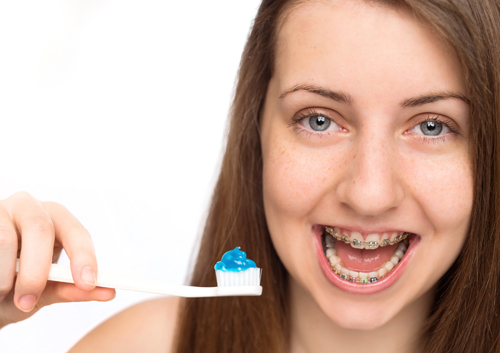
  1. How is brushing with braces like geometry? It’s all about the angles. Brush the tops of your teeth and braces with your brush angled down. Brush the bottom of your teeth with the brush angled up. Pointy brushes, aka interproximal brushes, are good for reaching the tiny spots around braces.
  2. Brush after every meal. If those sneaky little food bits hide in your mouth for very long, they’ll turn into plaque. And plaque is a sign of a very unhappy mouth.
  3. Brush one tooth at a time for at least ten seconds, and pay close attention to the spots where your braces touch your teeth.
  4. Fluoride is your new BFF. Make sure your toothpaste and mouthwash contain this cavity-fighting ingredient.
  5. Braces are no excuse not to floss. In fact, saying you can’t floss because you have braces is like saying the dog ate your homework. Dr. Viney Saini and our staff, like your geometry teacher, aren’t going to buy it. Be sure to floss after every meal.

Planning Your Vegetarian Diet with Your Oral Health in Mind

August 5th, 2020

If you’ve been following a vegetarian or vegan diet, you know that there’s much more to living a healthy life than simply avoiding meat products. Making sure your diet includes enough protein, as well as any nutrients that are primarily available in animal products, takes planning, and there’s no one-menu-fits-all solution.

Why? Because there’s no one menu that will suit all vegetarians. Specific vegetarian diets can allow for many different options:

  • Vegan—a plant-based diet which excludes meat, fish, dairy, and egg products
  • Ovo-vegetarian—includes eggs as a dietary option, but no dairy
  • Lacto-vegetarian— includes dairy as a dietary option, but no eggs
  • Lacto-ovo-vegetarian—a meat-free diet which allows both dairy products and eggs

If you are a pescatarian, who eats fish on occasion, or a flexitarian, who sometimes includes meat in a meal, your menu options are even broader.

So let’s look at the big picture—a healthy vegetarian diet is really more concerned with the foods you do eat for nutrition rather than the foods you don’t. You can create a meal plan rich in all your essential nutrients with a little research, no matter which type of vegetarian diet is your go-to choice.

And while you’re constructing your ideal menu guidelines, don’t forget about your dental nutrition!

In terms of keeping your teeth and gums their healthiest, what important vitamins and minerals are often missing from vegetarian and vegan diets? Let’s look at three of them.

  • Calcium

Calcium is essential for maintaining strong bones and tooth enamel. Without enough calcium, a weakened jawbone leads to loose, and even lost, teeth. The acids in our food and the acids created by oral bacteria also weaken the minerals in enamel, including calcium. These weak spots can eventually become cavities. A diet rich in calcium not only supports the bones holding our teeth, but can even help repair, or remineralize, enamel which has been weakened by acidic erosion.

For vegetarians who include dairy in their diets, dairy products are a great way to include calcium. Milk, cheese, and yogurt are traditional and rich sources of this mineral.

For vegans, it’s a bit more challenging, but still doable! Non-dairy foods providing calcium include dark green vegetables (kale, broccoli, spinach), certain types of tofu, and fortified cereals, juices, and non-dairy milks.

  • Vitamin D

Now you’re ready to put that calcium to work by making sure you have enough vitamin D in your diet. Vitamin D not only helps keep our bones healthy, it also enables our bodies to absorb calcium. Bonus—it’s been linked to better gum health in several studies.

So how to get more vitamin D? If you eat dairy, most dairy products have been fortified with vitamin D. If eggs are a part of your diet, egg yolks are a great source. Pescatarians can enjoy the benefits of vitamin D from fatty fish such as tuna and salmon.

Because we get most of our vitamin D from sun exposure or foods derived from animals, plant-based foods are not a practical way to obtain the vitamin D you need. But, just as non-vegetarians can get plentiful vitamin D from fortified dairy products, vegans also have options. Try adding cereals, juices, and non-dairy milks fortified with this essential nutrient to your diet, or take a vegan vitamin D supplement.

  • Vitamin B12

Vitamin B12 is essential for healthy red blood cells, nerve cell development, brain function, and DNA production. (This is why it’s especially important for pregnant and nursing women.) Vitamin B12 can also impact your oral health. A B12 deficiency can cause a swollen, sore, or inflamed tongue, loss of taste, and gum, tongue, and mouth ulcers.

Unfortunately, vitamin B12 is reliably found only in animal foods and nutritional yeasts. If you would prefer an egg-free and dairy-free diet, look to B12 supplements or B12-fortified cereals, plant-based milks, energy bars, and other vegan options. This is a good subject to discuss with your physician, because even supplements and fortified foods might not provide enough B12.

In fact, Dr. Viney Saini can be vital resources when you’re planning your healthiest vegetarian diet. The next time you visit our Clarksburg, MD and Frederick, MD office, ask for recommendations for supplements if you’re concerned that diet alone can’t provide for all of your nutrition essentials. Finally, care should be taken to ensure that, even with supplements, you get the proper amount of the vitamins and minerals you need.

As a vegetarian, you are used to the concept of care. Whether it was concern for nutrition, the planet, the animal world, or another reason that drew you to a vegetarian diet, be sure to care for your body as well as your dietary choices. Careful planning can ensure a diet which supports not only your general health, but your oral health, for a lifetime of nourishing—and well-nourished—smiles.

How Often Should You Brush?

July 29th, 2020

If you’ve been following your dentist’s advice, you know that you should be devoting two minutes twice a day to gentle, thorough brushing, and floss carefully at least once a day. It’s automatic. It’s habit. You’re in the zone. Now that you have braces or aligners, though, it’s time to step up your game!

Removing Food Particles

No one wants to worry about food particles stuck in braces right after lunch—or, worse, noticed hours after lunch! Because food tends to stick around brackets and wires, Dr. Viney Saini and our Clarksburg, MD and Frederick, MD team recommend brushing after a meal. Not only will you be confident in your smile, you’ll be improving your dental health.

But why?

Better Plaque Removal

Plaque is a sticky film containing acid-producing bacteria. These acids lead to weakened enamel and, eventually, cavities. Careful brushing with a fluoride toothpaste helps eliminate plaque. But as you may have discovered, it can be more difficult to clean around brackets and wires. Brushing after eating will help keep plaque from forming on your enamel, and using the right tools (floss made for braces and interproximal brushes) will help clean plaque more effectively.

But what about aligners?

If you wear clear aligners, you take them out when you eat. This avoids the problem of food particles trapped in brackets and difficulty brushing around wires. But this doesn’t mean you are home free. Brushing after every meal is also a good idea when you wear aligners.

Our teeth have an organic way to help remove food particles, acids, and bacteria between brushings—saliva! Your aligners, while covering your teeth, decrease their exposure to saliva. It’s really important, then, to make sure you brush after eating. Otherwise, food particles and acids can remain on your teeth after you replace your aligners, increasing the risk of enamel erosion and decay.

Brushing helps keep your aligners clear as well. If you notice aligner discoloration, this could be the result of food residue such as tomato sauce or coffee that remained on the teeth after a meal. Anything that stains your enamel can stain your aligners. And don’t forget about plaque. Plaque can stick not only to your enamel but to your aligners as well. If you notice that your aligners are cloudy, or have an unpleasant odor, talk to us about the best way to keep them their cleanest.

Make a Plan

So, what can you do to make brushing more convenient during a busy day? Be prepared! Keep a small kit with you containing a travel brush, a small tube of toothpaste, floss, and an interproximal brush for quick cleanings when you’re out and about, and you’ll never have to worry about your smile.

Of course, there are occasions when it’s just not possible to brush. At times like this, whether you have traditional braces or aligners, it’s a good idea to rinse well with water after meals or snacks, and brush as soon as you can.

Start your new dental routine now, and soon it will be automatic. An everyday habit. Your new comfort zone. After all, taking a few extra minutes from your day to brush after every meal will be well worth it when you end your orthodontic treatment with a smile that is as healthy as it is beautiful!