Our Blog

What Are Adjustments?

November 25th, 2020
If you’ve just gotten braces at our Clarksburg, MD and Frederick, MD office, you’ve probably also learned a whole new vocabulary. Malocclusion, brackets, archwires, ligatures, elastics—you’ve got the definitions down. But now you’re scheduled for an “adjustment.” What exactly does that mean?

Why Do I Need an Adjustment?

After all, you’ve just gotten braces! But the fact is, moving your teeth to their ideal location is a process that involves many steps. The brackets and wires you have today are only a starting point. Wires, and rubber bands if you need them, put gentle pressure on the teeth, gradually moving them into a better position. Every time we see you, we check the progress you’ve made and adjust your braces to move the teeth into even better alignment. It’s a careful process to make sure your teeth and jaws fit together perfectly for straight teeth and a healthy bite.

What Will Happen at an Adjustment?

Because your braces are made specifically for you, there is no one answer for everyone or even every appointment. Usually, your ligatures (the colorful bands around your brackets) will be removed, and often the orthodontic wire that is attached to your brackets will be removed as well. We’ll check to make sure you are brushing and flossing properly around your wires and brackets, and check on the condition of your braces.

Your wire might be adjusted, or bent, or tightened, or replaced all together. In the beginning, the wire will probably be more flexible. Later in your treatment, you might get a thicker, firmer wire to move your teeth more effectively, or we might bend a wire to move specific teeth.

If you need rubber bands to make sure your bite is in alignment, we’ll show you how to attach and take care of those. We’ll also look for other adjustments that might need to be made to your brackets. If you have any concerns about brackets, wires, or any other part of your braces, let Dr. Viney Saini know! And once we’re done adjusting your braces, this is your chance to change the color of your ligatures for a new look.

Will It Hurt?

You might suffer some discomfort in the hours after an adjustment, so treat yourself gently! Stick to soft foods for a few days, and treat yourself to something cold and soothing like ice cream, yogurt, or a smoothie. Brush gently if your teeth are sensitive. Usually, over-the-counter pain relievers will take care of any soreness. You can even take a pain reliever 30 minutes to an hour before the adjustment if you are expecting some discomfort. We have more great ideas on how to reduce any tenderness you might feel—let us know if we can suggest some.

Within a day or two, you should be back to normal. If you ever suffer serious discomfort, or if the soreness lasts more than a few days, give us a call.

Remember, each adjustment brings you closer to your goal—straight teeth and a healthy bite. And that’s the definition of a beautiful smile!

Do I really need to wear my rubber bands with my braces?

November 18th, 2020

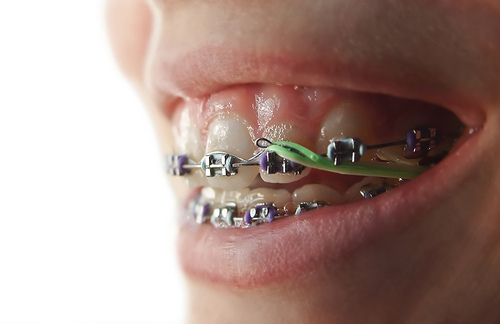
Most of our patients at Viney P. Saini Orthodontics will need to wear rubber bands at some point during their orthodontic treatment. The main reason our patients are instructed to wear rubber bands is to correct their bite. If your teeth do not fit together properly, Dr. Viney Saini will recommend that rubber bands be used. Dr. Viney Saini may also recommend using rubber bands to close or open spaces.

Rubber bands are a critical part of your treatment, and wearing them as Dr. Viney Saini and our team recommend will help move your teeth into the desired position. Dr. Viney Saini may ask you to wear your rubber bands full time, meaning that they should only be taken out when you brush and floss your teeth three times a day. Other times, you may be asked to only wear them part-time, like only during the day or only during sleep.

If you still have any questions about orthodontic rubber bands, we invite you to give us a call or ask us during your next adjustment appointment. Remember, wearing rubber bands as prescribed by Dr. Viney Saini is an important step during your treatment, and can reduce the time you have your braces. If you lose your rubber bands or run out, stop by our Clarksburg, MD and Frederick, MD office and pick up more!

Find Out how Your Diet can Cause Cavities

November 11th, 2020

Sometimes food that’s good for your body isn’t necessarily the best for your teeth. Dr. Viney Saini and our team want you to know which healthy foods can harm your teeth and gums, and what steps you can take to continue enjoying these foods, even when you’re dieting.

When you begin to substitute empty calories with whole foods, make sure you also remember to focus on your dental health. The majority of people tend to switch out sugary foods in favor of fruits and vegetables when they diet.

It’s worth knowing that most fruits are highly acidic and composed of natural sugars. Some of the highly acidic fruits to watch out for include apples, grapes, strawberries, pineapples, blueberries, oranges, and grapefruit. Moderation is key here, as with all other things. Fruits can be a great source of energy to help you through your day, but try not to overdo them.

Often, people also incorporate more leafy greens into their diets, which mean plenty of salads. Salad dressing is another item you’ll want to watch out for. Many dressings are filled with vinegars and sweeteners that include harmful acids, which change the pH of your mouth. When your mouth shifts from alkaline to acidic, your smile also turns to a higher risk for erosion and decay.

Rather than get rid of these foods altogether, simply change what you do after you eat them. Rinse your mouth out with water, brush your teeth, or eat alkalizing foods after consuming these acidic foods. Healthy alkalizing foods include dairy products such as eggs and yogurt, or any type of vegetable.

If you have questions regarding your current diet and its effect on your oral health, please contact our Clarksburg, MD and Frederick, MD office and speak with a member of our staff. If you’ve begun to make changes in your diet toward a healthier lifestyle, we hope these tips can help your make positive changes to your oral health. Our team at Viney P. Saini Orthodontics wants a healthy lifestyle to be a top priority in your life.

Fluoride and Your Orthodontic Treatment

October 28th, 2020

Our team at Viney P. Saini Orthodontics knows that there are many ways you can protect your pearly whites throughout your orthodontic treatment. If you follow the rules and brush your teeth twice a day, floss often, and protect your appliances from damage, you should have a successful treatment.

But did you know there’s another way to keep your teeth sparkling and healthy during your time wearing braces?

Fluoride, the mineral that helps you prevent cavities and tooth decay, can also help keep your teeth strong. Fluoride comes in two varieties: topical and systemic. Depending on your oral health or the recommendation of Dr. Viney Saini, you may be required to have a fluoride treatment every three, six, or 12 months. We may also prescribe a fluoride product such as a mouthwash, gel, or antibacterial rinse for at-home treatment to keep your teeth happy in between visits.

If you have any other questions about fluoride or your treatment, please don’t hesitate to give us a call!