Our Blog

The Importance of Orthodontic Treatment at a Young Age

March 2nd, 2018
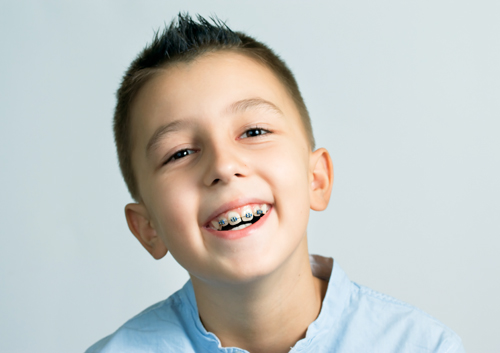
When you think of orthodontic treatment, you may automatically assume that it only relates to older children and teens with alignment and spacing issues. But this isn’t the case: Orthodontic treatment at Viney P. Saini Orthodontics offers many benefits when applied at a young age.

By considering orthodontic treatment at a younger age, Dr. Viney Saini and our staff are able to identify your child’s alignment issues early on, and are able to intervene in order to provide treatment as the teeth begin to develop. It is important to start dental care early, not only for proper dental health and the cosmetic benefits, but to improve a child’s overall health as well.

The Benefits of Straighter Teeth

Besides the cosmetic benefits, there are multiple advantages to starting orthodontic treatment at a young age:

  • It can reduce the extent of orthodontic treatment needed later.
  • With early treatment, the pediatric dentist helps guide the teeth into their right position to prevent the removal of teeth and improve an overbite, underbite, or crossbite.
  • Straighter teeth are easier to clean and better for preventing tooth decay.
  • As a benefit to you, the parent, your child’s orthodontic expenses will be much lower with early treatment.
  • Lastly, much early treatment is covered by dental insurance.

Stages of Orthodontic Treatment

Multiple stages are included in early orthodontic treatment, with three stages in all:

The first stage is early treatment that starts around age two or three, and continues until the child is around six years old. This stage deals with preventive measures, such as avoiding bad habits that lead to crooked teeth and creating a plan for the future based on how the teeth are growing in.

During stage two, when the child is six to 12 years old, the first permanent teeth erupt and the dentist looks at possible early treatment for misalignment or bite issues.

Finally, stage three occurs during adolescence to correct any further problems with permanent teeth.

Dr. Viney Saini and our staff are able to see how the teeth first erupt and know right away whether or not your child will need to have braces later on. Early treatment means fewer procedures, cleaner teeth, and less expense.


What's the difference between an orthodontist and a dentist?

February 23rd, 2018

Orthodontists and dentists both help patients improve their oral health, but in different ways. Dentistry is a broad medical specialty that deals with the teeth, gum, nerves, and jaw, while orthodontics is a specialty within dentistry that focuses on correcting bites, occlusion, and the straightness of teeth. One important difference is that all orthodontists like Dr. Viney Saini are dentists, but not all dentists are licensed orthodontists.

How are they similar?

The main similarity between a dentist and orthodontist is that they both focus on oral care. An orthodontist can work in a dental office and provide the same care as a dentist. So in this respect, they are quite similar. They are both considered doctors, and deal with the teeth and gums.

How are they different?

There are more differences than similarities. An orthodontist requires additional schooling as a dental specialty; the situation is similar to a doctor who obtains additional schooling to become a surgeon. Another difference is that orthodontists specialize in helping patients with the alignment of their teeth, improving their bite, or fitting them for corrective braces and devices. If a patient has an overbite, a dentist will refer him or her to an orthodontist.

Dentists typically encourage good oral hygiene and provide services related to:

  • Tooth decay
  • Root canals
  • Gum disease
  • Crowns
  • Bridges
  • Veneers
  • Teeth whitening

Orthodontists are dentists that specialize in the alignment of teeth, and provide services related to:

  • Misaligned teeth
  • Crowded teeth
  • Overbite
  • Underbite

What an orthodontist can help with

Orthodontists help with crooked teeth, but they assist patients with other issues as well. These include overbites and underbites, crossbites, spaces between teeth, overcrowding of teeth, and the treatment of temporomandibular disorders (TMD). Additional problems with the jaw also need to be treated by an orthodontist.

While a dentist may be trained to provide orthodontic care in addition to extractions, TMJ treatments, and fillings, trusting your smile to an orthodontist can better balance the different procedures you require.

To learn more about the difference between dentists and orthodontists, or to schedule an initial consultation with Dr. Viney Saini, please give our team at Viney P. Saini Orthodontics a call at our convenient Clarksburg, MD and Frederick, MD office.

Caring for Your Smile after Invisalign® Treatment

February 16th, 2018

You have done a lot of work to get the perfect smile. You wore your Invisalign aligner trays and cared for your teeth, and now your treatment is done. You still need to take care of your teeth to keep your beautiful smile. Keeps these things in mind when you think about your oral care routine.

Retainers

Many patients do require a retainer after Invisalign treatment. This will be based on your unique situation. If a retainer is recommended by Dr. Viney Saini, use it as directed. Retainers prevent your teeth from shifting back into their original position. You should also avoid hard, crunchy foods for the first couple of weeks as your teeth adjust. For younger patients, retainers are normally used until the wisdom teeth come in or are extracted.

Brushing and Flossing

Brushing and flossing must be part of your daily oral care. Flossing helps remove the plaque, which becomes tartar or calculus. This build up can lead to gingivitis and gum disease. Your gums may be more sensitive for a week or two after your orthodontic work is completed. A warm salt water rinse may relieve discomfort.

Your teeth may be slightly sensitive for a short time. They have been protected by your Invisalign aligner trays and now are fully exposed. You might want to try a sensitive toothpaste to get through the transition. Just ask; we will be glad to recommend the best type for your needs. If your teeth are stained, a professional whitening treatment can be considered.

Regular Dental Checkups

You still need to have regular dental exams. Professional cleanings and X-rays make sure that both your teeth and gums stay healthy so you can keep your teeth for life. If cavities or other problems are found, they can be taken care of quickly.

If you have any questions about how to care for your teeth after your Invisalign program, please ask our Clarksburg, MD and Frederick, MD team. We want you to keep your healthy smile and enjoy the results of your Invisalign treatment.

Team Dark Chocolate

February 9th, 2018

Valentine’s Day is the holiday to celebrate all the treasured relationships in your life. It’s a time to honor love in all shapes and forms with cards, social gatherings, and sometimes even binge eating of sweets.

It's hard to look the other way when grocery stores and pharmacies are invaded with goodies connected to the Valentine’s Day theme, and especially if you’re on the receiving end of some of these sweets. We get it. In fact, we’re all for it!

However, we also support a cavity-free smile. So in the interest of your dental and general health, and because we think it’s genuinely tasty, Dr. Viney Saini recommends an alternative to the Valentine treats you may be accustomed to: dark chocolate. 

Yes, Healthy Chocolate Exists

Studies have shown that dark chocolate is high in flavonoids, an ingredient found in the cocoa beans used to make chocolate. Flavonoids can help protect the body against toxins, reduce blood pressure, and improve blood flow to the heart and brain.

By opting for dark chocolate rather than milk chocolate, you get to reap these benefits! Pretty sweet, right? Just make sure to stick to high-quality dark chocolates that have undergone minimal processing.

Dark Chocolate, AKA Protector of Teeth

Not only does dark chocolate provide some nice benefits for your overall health, it also helps protect your teeth against cavities! According to the Texas A&M Health Science Center, dark chocolate contains high amounts of tannins, another ingredient present in cocoa beans.

Tannins can actually help prevent cavities by interfering with the bacteria that causes them. Think of them as scarecrows for bacteria. They don’t always prevail, but isn’t it nice to have them there?

Smooth Never Sticky

Unlike many popular candies, dark chocolate is less likely to stick in the crevices of your teeth. Chewy, gooey sweets are more likely to hang around in your mouth for longer periods of time, which means they raise the odds of your harboring cavity-creating bacteria.

While some dark chocolates have additives like caramel or marshmallow, it’s best to opt for the plain varieties, which are just as delicious. If you’re feeling festive, though, a dark chocolate with caramel is still better than a milk chocolate with caramel, so that’s the way to go!

While dark chocolate has some pretty sweet benefits, the most important thing to remember (whether you go the dark chocolate route or not), is that moderation is key. That being said, we hope you have fun satisfying your sweet tooth and shopping for treats for your friends and loved ones. Happy Valentine’s Day from all of us at Viney P. Saini Orthodontics!